Plant Nutrition Fundamentals
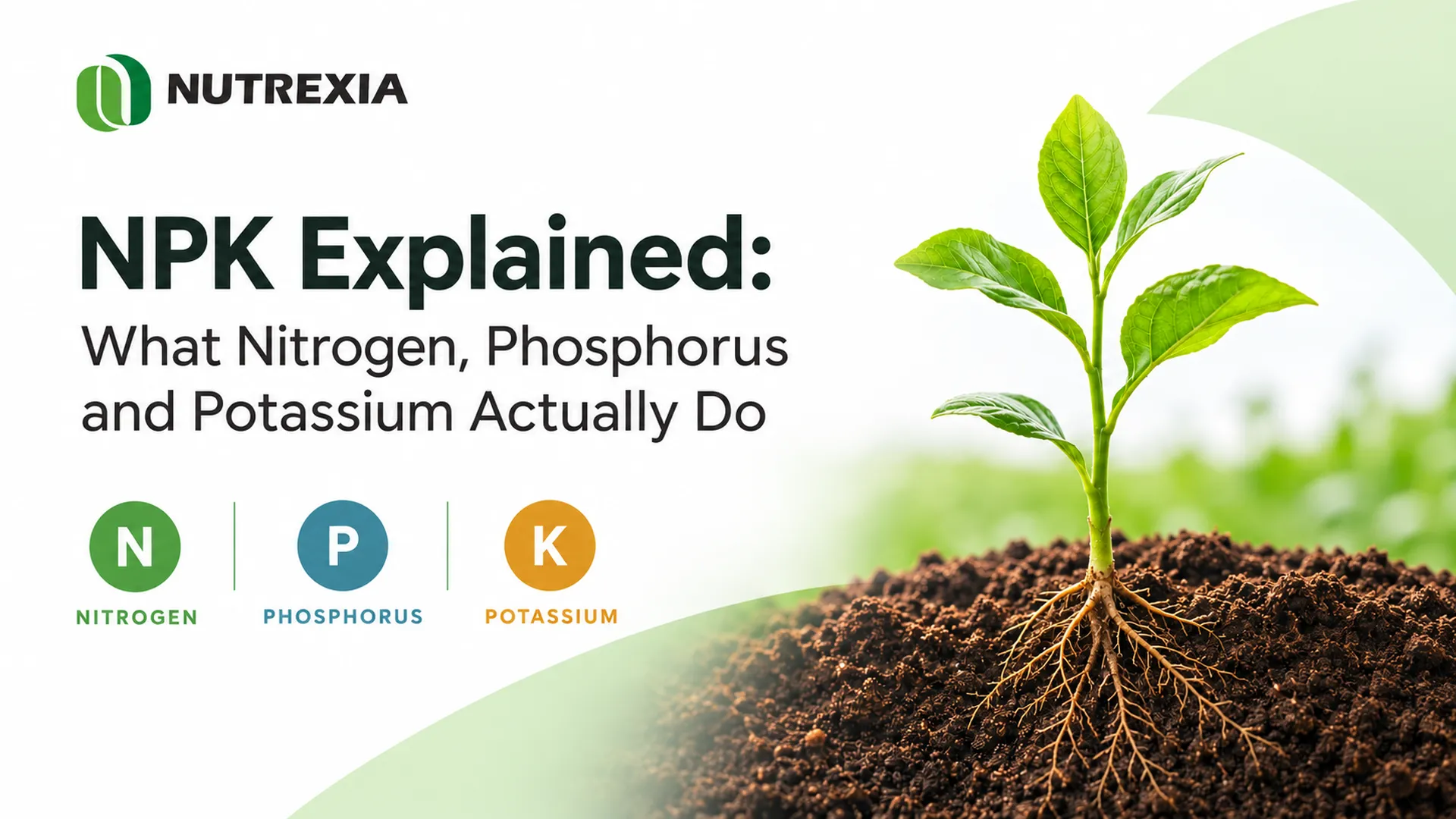
NPK Explained: What Nitrogen, Phosphorus and Potassium Actually Do
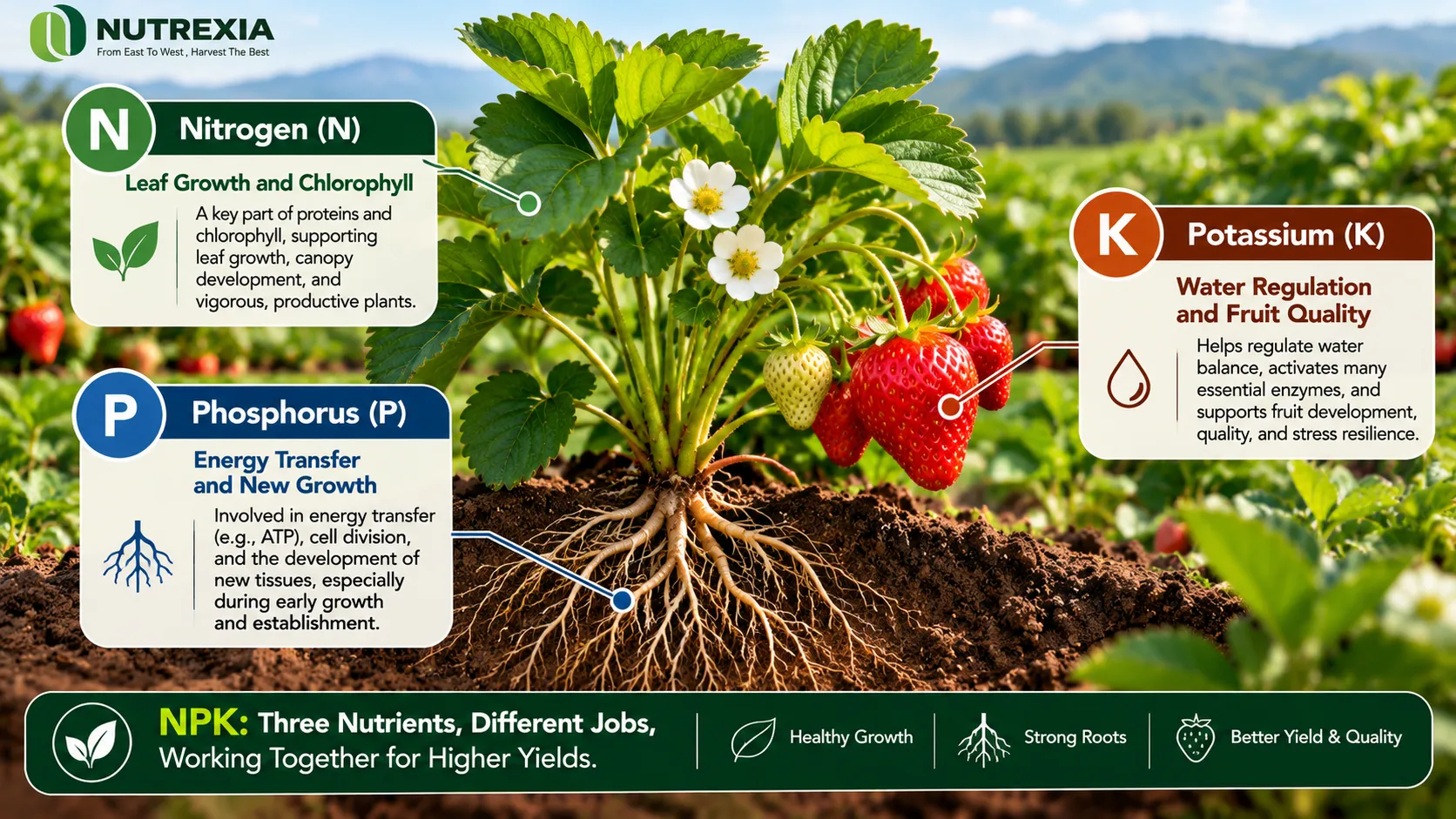
Nitrogen builds the photosynthetic canopy, phosphorus supports energy transfer and new growth, and potassium regulates water balance, enzymes and crop quality.
What do nitrogen, phosphorus and potassium do for plants?
Nitrogen (N) builds proteins, chlorophyll and the productive leaf canopy. Phosphorus (P) supports energy transfer, cell division and new growth. Potassium (K) regulates water balance, activates enzymes and supports the movement of sugars, crop development and quality.
Plants need all three in relatively large amounts, which is why they are called primary macronutrients. But they do different jobs and are not interchangeable. NPK is not a universal recipe: effective nutrition supplies the nutrients a crop needs in the right amounts, timing and root-zone location for the soil and production system.
Nitrogen builds the plant’s growth engine
Nitrogen is part of amino acids, proteins, nucleic acids and chlorophyll. Proteins and enzymes drive plant growth, while chlorophyll allows leaves to capture light for photosynthesis.
Why nitrogen matters in the field
Adequate nitrogen helps crops develop productive leaves and shoots, build canopy and support yield formation. Demand often rises during active vegetative growth, although the best timing depends on the crop, growth stage, soil, irrigation and weather.
Too little nitrogen can limit canopy development and yield. Too much may cause excessive vegetative growth, delay maturity in some crops, increase lodging risk in cereals or produce a canopy that is difficult to manage. In fruit trees, excessive nitrogen may favor vigorous shoots at the expense of the desired balance between vegetative growth and fruit production.
Common clues of nitrogen deficiency
A common early clue is general paling or yellowing that begins on older leaves because nitrogen can move from older tissue to younger growth. Plants may remain small, with thin shoots and a weak canopy. These signs are not proof: waterlogging, root damage, disease and other nutrient problems can also cause yellow leaves and poor growth.
Practical nitrogen management
Base nitrogen supply on crop demand, realistic yield targets, soil nitrogen, organic inputs, irrigation and the risk of loss. Where appropriate, split applications can better match supply to uptake and reduce the amount exposed to leaching or other losses. Do not apply nitrogen only to make a crop look darker green.
Phosphorus supports energy transfer and new growth
Phosphorus is involved in energy transfer through compounds such as ATP. It is also part of DNA, RNA and cell membranes, so it supports cell division and the development of growing tissues. Young roots and shoots are actively building new cells, making phosphorus especially important during establishment when supply is limiting.
Why phosphorus matters in the field
Adequate phosphorus supports root development and crop progression through vegetative and reproductive stages. It is not a simple flowering switch: flowering, fruit set and yield also depend on genetics, light, temperature, water, pollination and the overall nutrient balance.
Unlike nitrate, phosphate usually moves only a short distance through soil. Reactions with soil minerals can make it less available, and uptake may be restricted in cold, dry or compacted soils or where roots are weak. A soil may contain substantial total phosphorus while only a fraction is available to plants.
Common clues of phosphorus deficiency
Plants may grow slowly and remain stunted. Some species develop dark green, dull, bluish or purplish leaves under certain conditions, but this symptom is not universal and may also reflect temperature or variety. Reduced root growth or delayed development may be more noticeable than a distinctive leaf symptom.
Practical phosphorus management
Use a locally calibrated soil test to determine whether phosphorus is needed and at what rate. Placement near the developing root zone can help in some systems because phosphorus is relatively immobile, but the correct method depends on the crop, soil and equipment. Avoid routine high-phosphorus applications where tests already show adequate or excessive levels; accumulated phosphorus can contribute to water pollution if it leaves the field.
Potassium regulates water, enzymes and crop quality
Potassium does not form the structural backbone of plant tissues in the same way as carbon- or nitrogen-containing compounds. It works mainly as a dissolved ion that activates many enzymes and helps regulate osmotic balance, stomatal movement and the transport of sugars and other compounds.
Why potassium matters in the field
By helping to regulate stomata—the pores that control gas exchange and water loss—potassium contributes to water-use regulation. It also supports carbohydrate transport, protein synthesis and processes involved in filling grain, tubers and fruit. Adequate potassium can support crop quality and resilience, but it cannot compensate for severe drought, salinity, disease or poor overall management.
Availability varies with soil texture and mineralogy, rooting depth, moisture and the balance of other cations. Sandy soils and intensively harvested fields can be more prone to depletion or leaching, while other soils may supply enough potassium for a particular crop without additional fertilizer.
Common clues of potassium deficiency
A frequent pattern is yellowing along leaf margins that can progress to brown, scorched-looking tissue, often first on older leaves. Growth and crop quality may also decline. Drought, salinity, root damage and other nutrient disorders can produce similar patterns.
Practical potassium management
Use soil tests, crop-removal estimates and crop-specific guidance to decide whether potassium is needed. Account for potassium removed in harvested products and residues. In fertigation, manage concentration and timing carefully and consider irrigation-water quality and root-zone salinity. More is not always better: excessive potassium can interfere with magnesium uptake and, in some circumstances, calcium uptake.
NPK roles and deficiency clues at a glance
| Nutrient | Main roles | Possible deficiency clues | Management focus |
|---|---|---|---|
| Nitrogen (N) | Proteins, chlorophyll, enzymes and canopy growth | Older leaves pale or yellow; weak, slow growth | Match supply to demand; manage timing and loss risk |
| Phosphorus (P) | Energy transfer, DNA/RNA, cell membranes and early growth | Stunting; sometimes dark green or purplish leaves | Test soil; consider placement and root-zone conditions |
| Potassium (K) | Enzyme activation, water balance, stomata and sugar transport | Leaf-edge yellowing or scorch, often on older leaves | Track soil supply and crop removal; avoid excess |
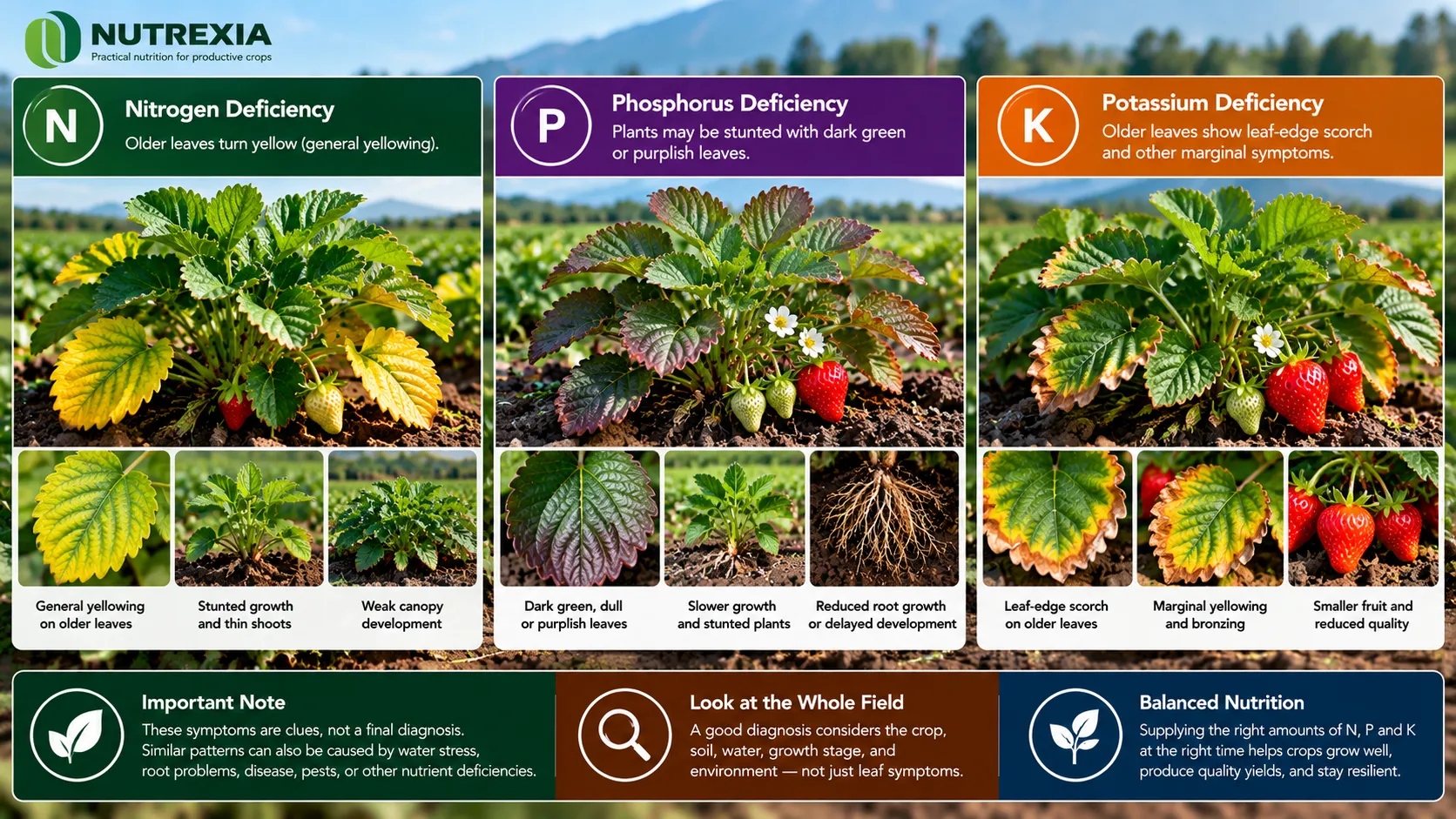
These symptoms are clues, not a final diagnosis. Always assess the whole field, including crop, soil, irrigation, weather, growth stage, roots, pests and disease.
What do the numbers on an NPK fertilizer label mean?
An NPK grade such as 15-15-15 or 20-10-10 expresses the guaranteed percentage by weight of nitrogen, phosphate reported as P₂O₅ and potash reported as K₂O under conventions used in many markets. The second and third numbers are therefore not usually percentages of elemental P and K. Always check the label and the regulations in your market.
For example, 15-15-15 contains 15% nitrogen, 15% phosphate expressed as P₂O₅ and 15% potash expressed as K₂O by weight. A higher number means a higher concentration of the listed nutrient component; it does not automatically mean a better product.
A balanced fertilizer does not necessarily have equal numbers. Balance means supplying nutrients in proportions suited to crop demand and the soil’s existing nutrient supply. No single NPK ratio is right for every crop, soil, climate or growth stage.
How can growers choose an NPK program more intelligently?
- Start with the crop and growth stage. A leafy crop, a cereal filling grain and a fruit tree building next season’s buds do not have identical demand or timing.
- Test the soil and, where useful, the plant. Soil tests help estimate phosphorus and potassium supply and identify pH or salinity constraints. Properly sampled tissue analysis can show what the crop has taken up.
- Check water, roots and soil conditions. Nutrients may be present but inaccessible when the root zone is dry, waterlogged, compacted, cold, saline or at an unsuitable pH.
- Match rate and timing to uptake. Avoid large, poorly timed applications. Split applications, suitable placement and fertigation can improve synchronization in appropriate systems.
- Count all nutrient sources. Manure, compost, residues, irrigation water, biological nitrogen fixation and nutrients already in the soil may contribute to supply.
- Monitor results and protect the environment. Record rates, timing, yield and quality. Excess nutrients waste money and can increase losses to air and water; chronic under-application can mine soil fertility.
Can leaf symptoms identify exactly which nutrient is missing?
Not reliably by themselves. Leaf color and shape provide useful early clues, but symptoms overlap. Water stress, root disease, pests, salinity, herbicide injury, pH problems and natural leaf aging can resemble nutrient disorders. Symptoms also vary with crop, variety, weather and severity.
Use a diagnostic sequence: note which leaves are affected first and where the pattern occurs; review irrigation, recent weather, fertilizer history and root health; compare the pattern with crop-specific references; then confirm with soil or tissue analysis where the decision has significant cost or yield implications. Avoid applying a nutrient solely because a leaf looks yellow or purple.
Why does nutrient balance matter in fruit trees?
Fruit-tree nutrition must support both the current crop and the tree’s long-term structure and reserves. Nitrogen maintains leaves and shoots, but excessive growth can disturb the balance between flowering and fruiting. Phosphorus supports energy metabolism and growing tissues, but extra phosphorus will not automatically improve flowering where supply is already adequate. Potassium supports water regulation and sugar movement associated with fruit development, but the required amount varies with species, crop load, soil supply and harvest removal.
For perennial crops, interpret symptoms alongside tree age, rootstock, crop load, pruning, irrigation, soil analysis and properly timed leaf-tissue tests. Do not use one NPK formula unchanged throughout the year or across all fruit species.
Key takeaways
- Nitrogen supports proteins, chlorophyll and vegetative growth.
- Phosphorus supports energy transfer, cell development and early growth.
- Potassium regulates water balance, activates enzymes and supports crop development and quality.
- Deficiency symptoms are clues, not definitive diagnoses.
- NPK label numbers describe concentrations; they do not prescribe the right ratio for every crop.
- Effective fertilizer programs combine crop demand, testing, water management, timing and local conditions.
Strong crop nutrition is not about choosing the highest NPK number. It starts with understanding what the crop needs, what the soil can supply and how to deliver nutrients efficiently. Explore Nutrexia fertilizer solutions or contact the Nutrexia team to discuss a crop- and market-specific approach.
References and further reading
Frequently asked questions
What does nitrogen do for plants?
Nitrogen is part of amino acids, proteins, nucleic acids and chlorophyll. It supports leaf and shoot growth and the photosynthetic canopy, but excessive nitrogen can cause overly vigorous growth, delayed maturity or lodging in some crops.
What does phosphorus do for plants?
Phosphorus supports energy transfer through compounds such as ATP and contributes to DNA, RNA, cell membranes, cell division and new tissue development. Its availability depends strongly on soil and root-zone conditions.
What does potassium do for plants?
Potassium activates many enzymes and helps regulate osmotic balance, stomatal movement and the transport of sugars and other compounds. Adequate potassium supports water regulation, crop development and quality.
What do NPK fertilizer numbers mean?
In many markets, an NPK grade reports nitrogen, phosphate expressed as P₂O₅ and potash expressed as K₂O as percentages by weight. Check the product label and local regulations because labeling conventions can differ.
Can leaf symptoms prove which nutrient is deficient?
No. Symptoms are useful clues, but water stress, salinity, root damage, pests, disease, pH problems and other nutrient disorders can look similar. Confirm important decisions with field history and suitable soil or tissue analysis.
About the agronomist

Somayeh Soroush
Plant & Horticultural Expert · Nutrexia R&D Specialist
From productive gardens to advanced greenhouse systems, Somayeh Soroush works where practical horticulture meets modern plant nutrition. She supports progressive growers and greenhouse teams across the Middle East, translating Nutrexia's research into clear, field-ready guidance for diverse crops and growing conditions.
Reviewed by: Somayeh Soroush